Quick Summary
Rock creates a durable, low-water front yard suited to San Antonio’s heat. Options include dry creek beds, boulder accents, decomposed granite paths, rock mulch, rain gardens, gabion walls, and full xeriscape conversions. Pairing rock with native plants cuts watering, and SAWS WaterSaver coupons can offset the cost of removing turf.
Rock has become one of the most popular materials for front yard design locally, and the reasons are practical. Well-planned landscaping ideas with rocks for front yard projects stand up to San Antonio heat, need a fraction of the water turf demands, and give a property a finished, contemporary look that holds through August. The 11 ideas below range from a weekend accent bed to a full front yard conversion.
Start With the Local Water Savings
Anyone converting turf to rock and native plantings should look at the SAWS WaterSaver Landscape Coupon before buying materials, since the program is built for exactly this project. Residential customers can apply for up to four coupons a year, each requiring at least 200 contiguous square feet of grass to come out, along with any sprinkler heads or drip lines inside the project area. Coupon values are set seasonally, with fall running higher than spring, and there is a lifetime cap of eight per service account.
The timing detail is worth knowing too. SAWS pauses the coupons over summer because new plants establish far better going into fall, which gives roots three mild seasons before facing their first Texas summer. Planning a rock and native plant conversion around that window improves plant survival and stretches the budget at the same time.
11 Landscaping Ideas With Rocks for Your Front Yard
1. Dry Creek Bed
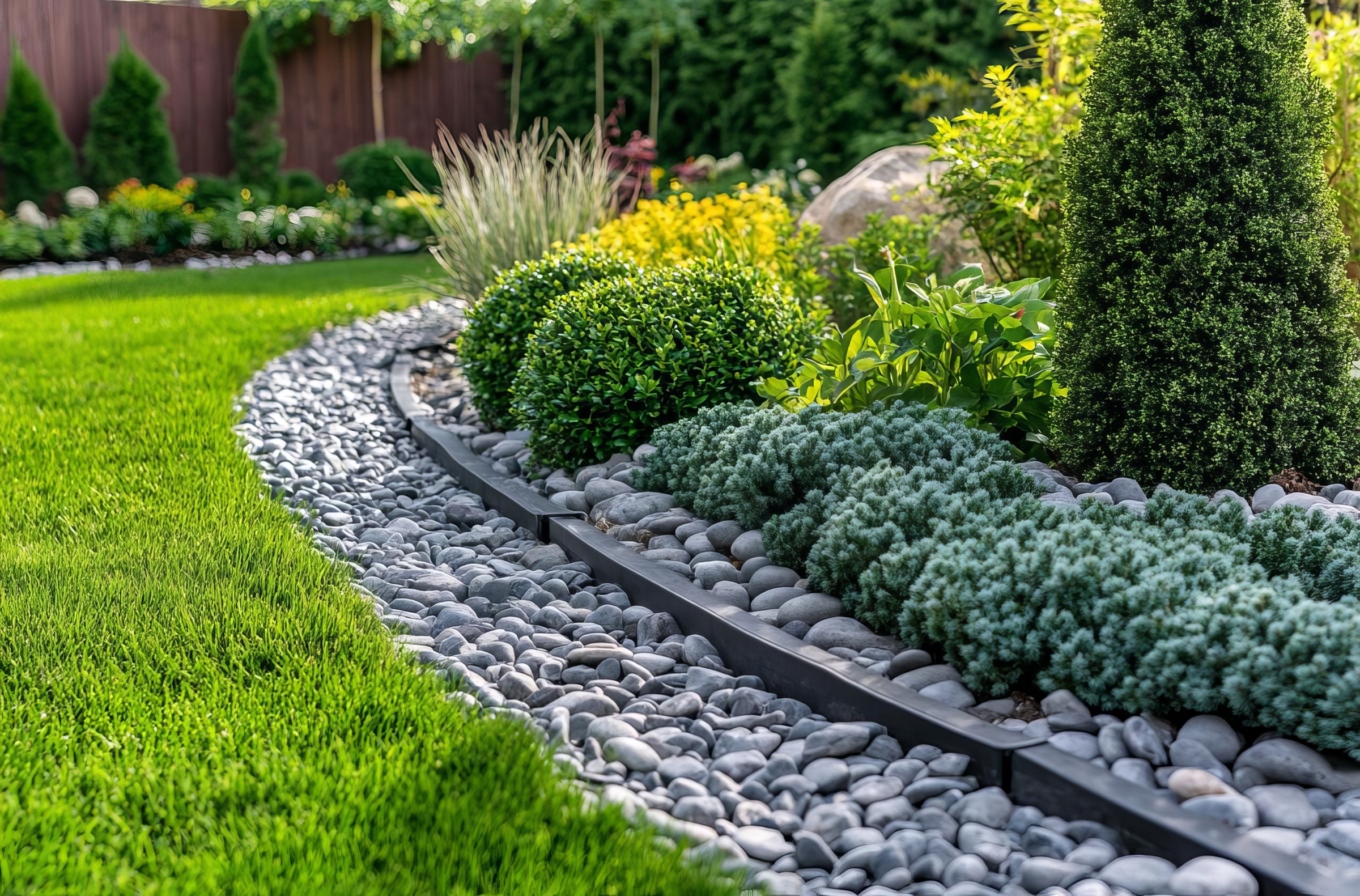
A dry creek bed uses river rock in varying sizes to mimic a natural streambed while directing stormwater away from a foundation. It earns its place along a slope or low spot where water pools after heavier spring rains.
2. Boulder Accents
Large natural boulders placed near an entry or along a planting bed add scale and permanence. Grouping two or three stones of different sizes reads as natural, whereas a single large stone tends to look placed.
3. Decomposed Granite Pathway
Decomposed granite and pea gravel paths are affordable, permeable, and simple to maintain. Bordered with steel or stone edging, a gravel path gives structure to an otherwise open front yard.
4. Rock Mulch Beds
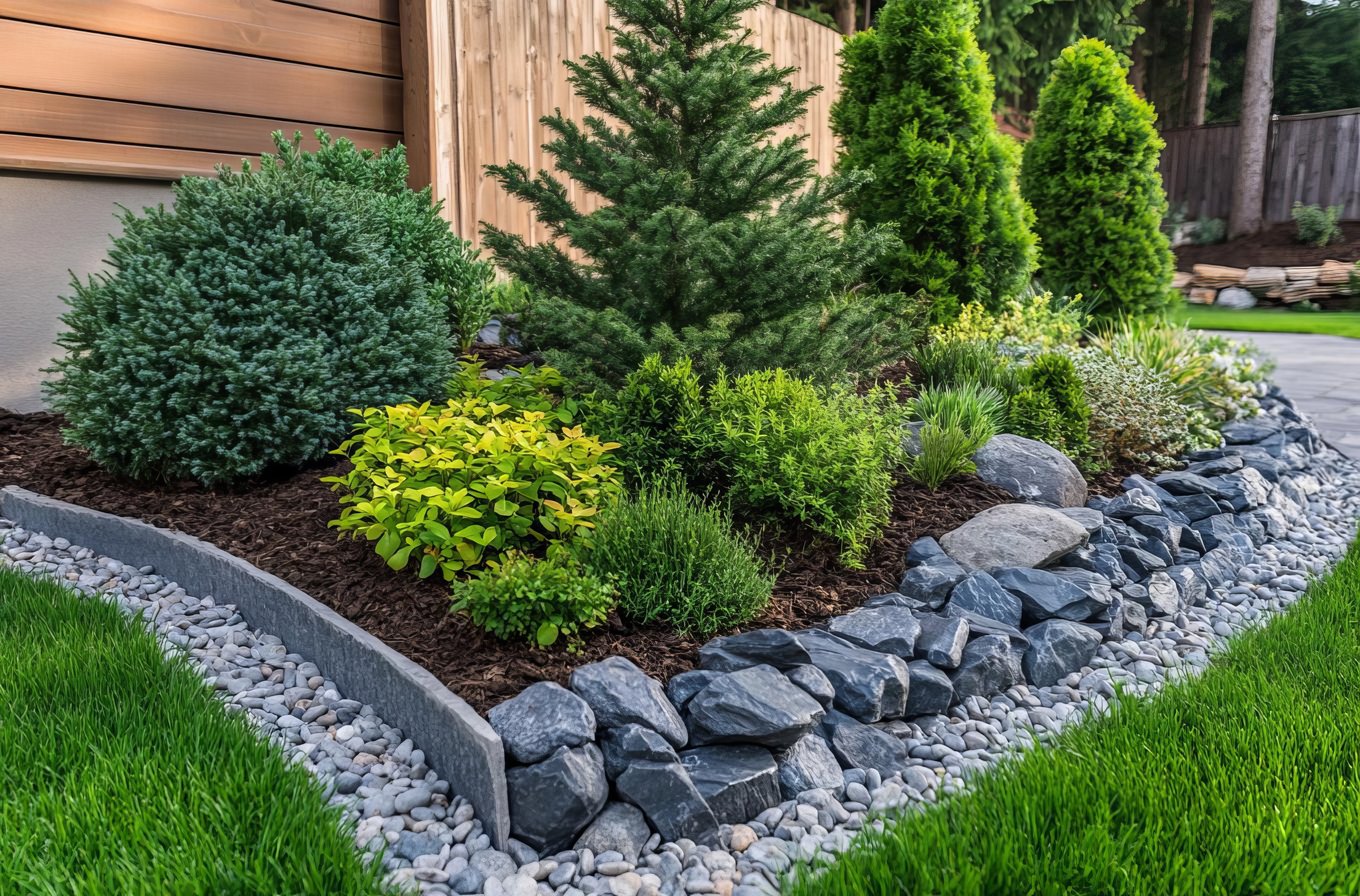
Swapping bark for stone in planting beds is among the most requested low-maintenance front yard landscaping ideas with rocks and mulch, since rock does not break down or need replacing annually. It also reflects heat away from the root zone, which suits drought-tolerant species.
5. Rain Garden With Rock Borders
A shallow planted depression lined with rock captures and filters runoff before it reaches the street. It solves a drainage problem and doubles as a planting feature, which makes it one of the more useful options for properties that shed water toward the curb.
6. Full Xeriscape Front Yard
A full xeriscape replaces turf with native, drought-tolerant plants set among decomposed granite, gravel, or larger stone. Our xeriscaping services are among the most requested work we do, because a well-layered xeriscape cuts water use sharply while still looking planted rather than paved.
7. Rock Border Around Trees
Ringing a shade tree with stone instead of grass protects the trunk from mower and trimmer damage and keeps water and mulch concentrated over the root zone. Leave a gap between the stone and the trunk itself.
8. Gabion Wall Accent
A gabion wall, meaning wire cages filled with stone, adds texture and can double as a low retaining wall on a sloped front yard. It handles local soil movement well and reads as distinctly modern.
9. Layered Rock Sizes for Depth
Combining boulders, medium river rock, and fine gravel within one bed creates depth a single stone size cannot. Layering is the easiest way to make a rock bed look designed rather than delivered.
10. Rock-Lined Walkway Borders
A single course of stone or river rock along an existing walkway gives a clean transition between hardscape and planting beds, without the cost of replacing the edging outright.
11. Rock Accent at the Mailbox or Entry Sign
A small rock bed around a mailbox post or entry sign adds polish for very little money, and it is the natural starting point for homeowners easing into a larger renovation rather than committing to the whole yard at once.
Combining Rock and Mulch for Low Maintenance Results
The most successful designs blend the two rather than choosing one. Rock belongs in high-visibility areas with sparse planting, while mulch serves beds with dense plantings where soil moisture and temperature matter more. A few rules keep the combination working:
- Use landscape fabric under rock beds to suppress weeds, but skip it under mulch beds where roots need room to spread
- Choose stone colors that complement the home’s exterior rather than competing with it
- Keep rock off tree trunks and wood structures, where reflected heat and trapped moisture cause damage
- Reserve mulch for beds with heavier irrigation needs, since rock dries surrounding soil faster
Homeowners searching landscaping ideas rocks for front yard designs often assume the choice is either-or. In practice, the split between the two materials is what makes a front yard both low maintenance and genuinely planted.
Why Choose Saylee Greer for Your San Antonio Landscape?
Saylee Greer provides expert landscaping design and build services in San Antonio, TX, and we design rock and xeriscape front yards for this climate rather than adapting a template built somewhere else. Plant selection, stone sourcing, and drainage all get settled based on the specific property.
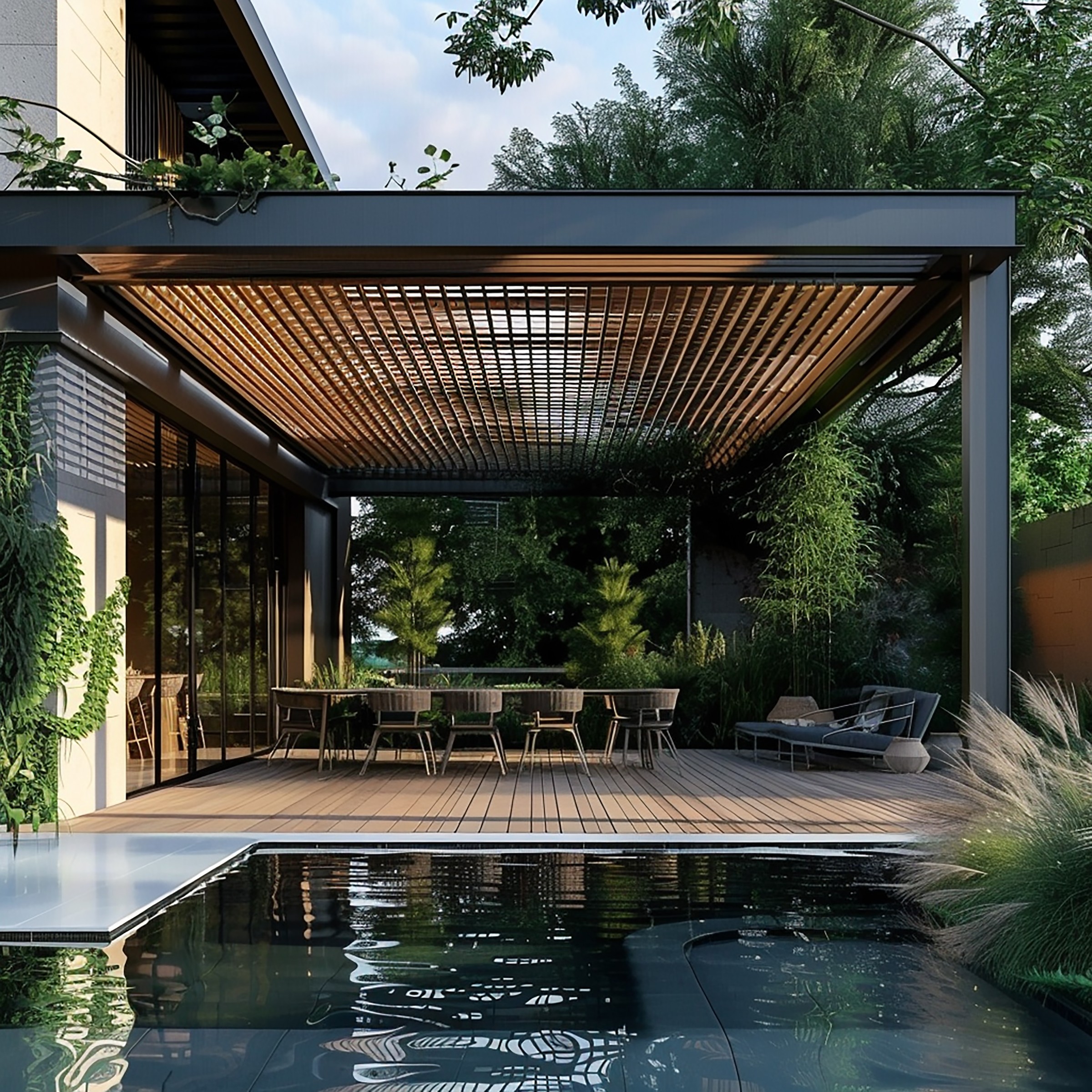
Our team also takes on work as an outdoor entertainment area designer in San Antonio, TX for homeowners who want the same design standard carried into the backyard. See examples of our completed front yard transformations in our project portfolio.
Plan a Rock Front Yard for Your Property
Reach out to Saylee Greer to schedule a consultation and get a rock landscaping plan drawn for a specific lot, soil type, and drainage pattern.
Frequently Asked Questions
Rock mulch beds, dry creek beds, decomposed granite pathways, boulder accents, tree borders, and xeriscape planting areas all rank highly. Combining rock with drought-tolerant natives produces a landscape that needs less water and less routine attention, with mulch reserved for the plants that want moisture retention.
A well-designed rock landscape improves curb appeal and signals that a property has been maintained. Durable materials, considered plant pairings, and defined pathways all strengthen a first impression. Rock landscaping guarantees no particular figure, though a coherent front yard makes a home more appealing to buyers.
Around 2 to 3 inches suits most planting beds. Larger decorative stone needs a deeper base to stay stable, while finer gravel performs at a shallower depth. Rock size, base material, drainage, and the surrounding plants all shift the ideal number.