Quick Summary
Landscape edging separates lawns, planting beds, and walkways while cutting maintenance. Common landscape edging types include steel, aluminum, plastic, natural stone, brick, concrete, and rubber. Around San Antonio, expansive clay soil, summer heat, and bed shape should drive the choice, and a compacted base keeps hard edging aligned through seasonal soil movement.
Edging is among the most overlooked details in a landscape, and it has an outsized effect on how finished a yard looks. The range of landscape edging types now available can feel overwhelming, particularly with expansive clay soil and a long, hot growing season to plan around.
Saylee Greer provides expert landscaping design and build services in San Antonio, TX, and edging is one of the first details we settle on a project because it governs everything downstream from bed maintenance to how well plantings hold their shape.
Why Edging Matters
Edging does considerably more than mark where lawn ends and garden begins. A properly set edge:
- Keeps mulch, gravel, and decomposed granite from migrating into the turf
- Blocks grass and weed roots from creeping into planting beds
- Holds a clean line that makes the whole yard read as intentional
- Cuts the time spent trimming and re-cutting bed edges by hand
How to Choose Edging for San Antonio Soil
Material selection should start with the ground it will sit in, since that is what fails first. Expansive clay across much of Bexar County swells in wet months and shrinks in dry ones, which pushes lighter materials out of alignment within a season or two. Properties north toward Boerne, Bulverde, and Spring Branch face the opposite problem, where shallow soil over limestone limits trench depth and makes anchoring the real challenge.
Four questions settle most decisions:
- Is the bed curved or straight? Curves favor metal, which flexes; straight runs open up brick and concrete.
- Will a mower run against it? Mower contact rules out thin plastic and rewards a flush concrete or stone strip.
- How much soil movement is likely? Heavier clay argues for a compacted gravel base under any rigid material.
- What is the existing hardscape? Edging should echo the patio and walkways rather than introduce a new material.
Common Landscape Edging Types
Steel Edging
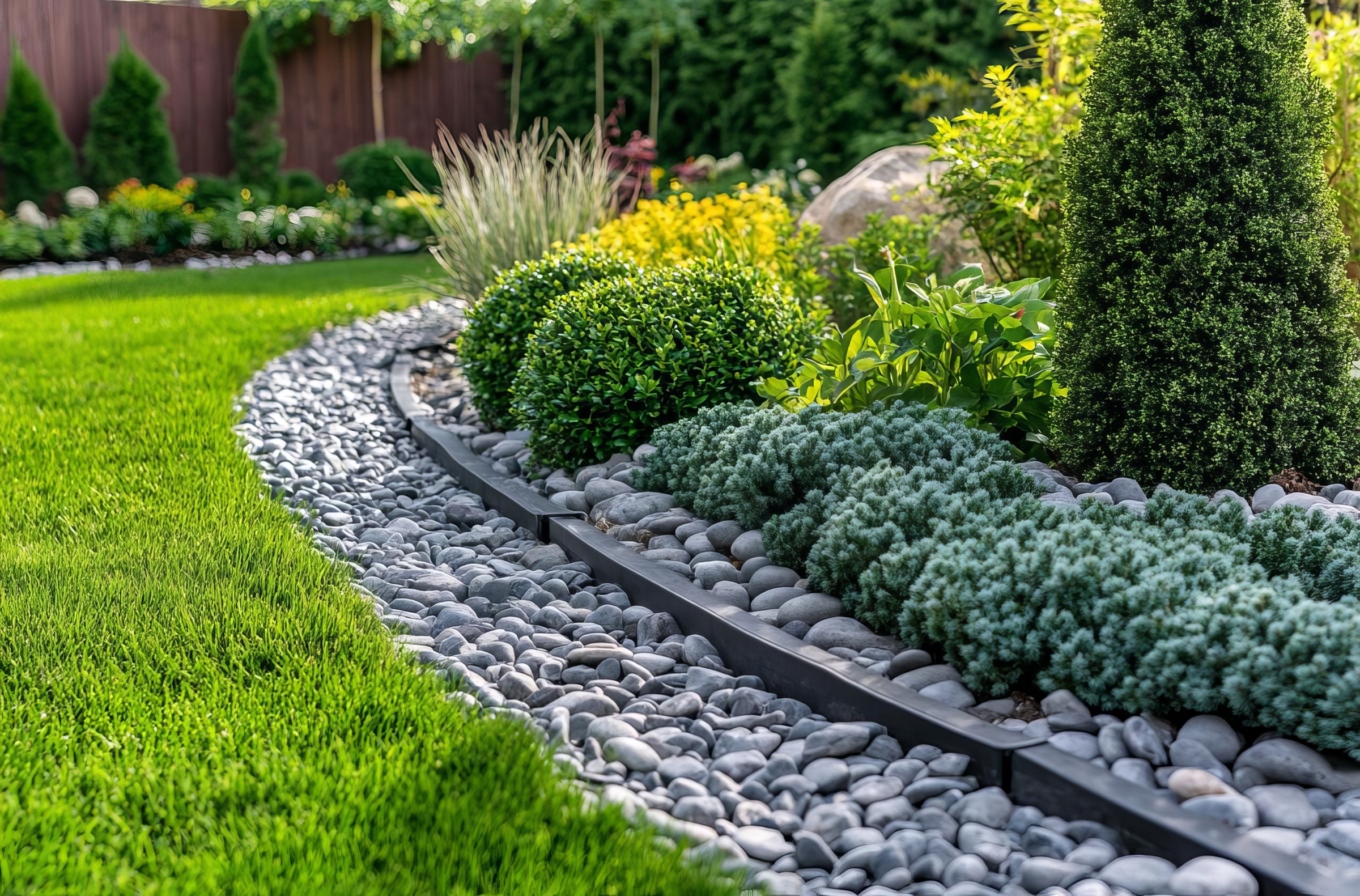
Steel is a favorite among professional landscapers because it holds a crisp, nearly invisible line and bends easily around curves. It resists warping in summer heat far better than plastic, and a properly installed steel edge lasts well over a decade.
Best for curved beds, modern landscapes, xeriscape borders. Watch for sharp edges during installation and a higher upfront cost than plastic.
Aluminum Edging
Aluminum offers the clean, low-profile look of steel without rusting, making it a strong landscape edging alternative for homeowners who want a nearly maintenance-free border and are willing to trade some rigidity for it.
Best for long-term low-maintenance borders. Watch for bending under heavy foot traffic or mower contact.
Plastic or Poly Edging
Plastic is the most budget-friendly option and the most widely stocked. In this climate, however, it turns brittle and cracks within a few seasons, and it tends to lift out of the ground as clay soil moves beneath it.
Best for short-term or budget-constrained projects. Watch for UV degradation and repeated reinstallation.
Natural Stone Edging
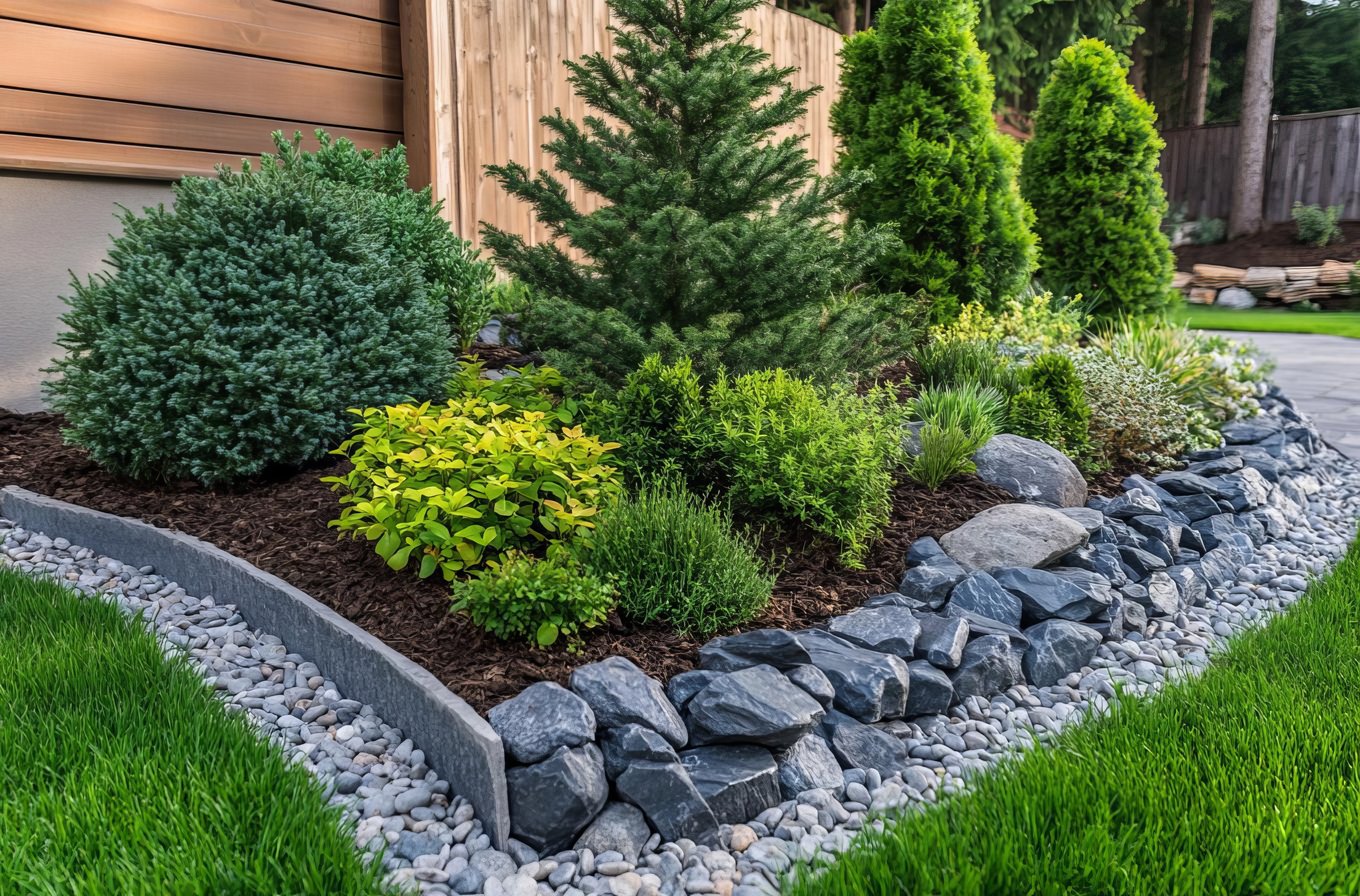
Stone edging in flagstone, fieldstone, or cut limestone brings texture and a timeless look, and it pairs particularly well with Hill Country architecture. It lasts indefinitely with minimal upkeep. Our natural stone and masonry crews regularly source local stone that sits comfortably against the native palette rather than fighting it.
Best for traditional and Hill Country style landscapes. Watch for higher installation cost and longer labor time.
Brick Edging
Brick laid flat, on end, or angled in a soldier course gives a landscape a classic, structured look. It is durable and easy to repair if one section shifts, which makes it a practical landscape edging alternative along high-traffic bed borders.
Best for traditional homes and walkway borders. Watch for shifting over time in clay soil without a proper base.
Concrete Edging
Poured or paver-style concrete creates a permanent, mower-friendly border that needs almost nothing once cured. It suits property lines and larger commercial-style landscapes where a continuous line matters more than flexibility.
Best for permanent borders, mower strips, commercial properties. Watch for near-impossible modification once poured, and cracking in shifting soil without base preparation.
Rubber Edging
Rubber flexes without cracking and handles extreme heat better than plastic, which makes it a reasonable middle ground. It appears less often in professionally designed landscapes on appearance grounds, though it works well in play areas and utility zones.
Best for play areas and informal beds. Watch for limited style options next to metal or stone.
Tips for Installing Landscape Edging
- Notify Texas811 before digging. State law requires it for mechanized excavation 16 inches or deeper, and the notice must come at least two working days ahead so operators can mark their lines
- Have irrigation and service lines located separately. The One Call Board of Texas notes that water and sewer operators are not required to join the notification system, so those lines are often left unmarked
- Dig a consistent trench depth so the top edge sits level along its full run
- Compact the base before setting stone, brick, or concrete
- Leave a small gap between edging and irrigation heads to avoid strike damage
- Match the material to the home’s existing hardscaping and patio
How Saylee Greer Approaches Edging
Edging is part of the design rather than a finishing touch applied at the end. That holds on every project we take on as an outdoor entertainment area designer in San Antonio, TX, from closing out a xeriscape bed to framing a walkway or defining the beds around an outdoor kitchen. Materials are chosen to hold their shape through Texas summers and heavy spring rains alike. It is also why we settle edging early in a design, since the choice affects bed depth, irrigation layout, and mowing access.
Define Your Beds With the Right Edging
Contact Saylee Greer to schedule a design consultation. We will match a landscape edging option to the soil, style, and budget on a specific property rather than a general recommendation.
Frequently Asked Questions
Natural stone and concrete rank among the most durable when installed correctly, and steel offers excellent longevity with a cleaner profile. The right answer depends on soil conditions, bed shape, and the maintenance level a homeowner wants. In clay soil, base preparation matters more than the material itself.
Steel and aluminum both follow gradual bends without creating flat spots, which is why they dominate curved bed work. Steel offers greater rigidity, aluminum a lighter option that will not rust. Flexible rubber and plastic also curve, though both have shorter lifespans outdoors here.
It can serve budget-conscious or temporary projects, but it rarely holds up long term locally. Sustained heat and UV exposure make plastic brittle, and seasonal soil movement works it loose. Metal, stone, and concrete all last considerably longer in permanent installations.